
- Florida Public Schools at a Glance
- How a Private School Prepares Children for College, Career, and Life
- Kindergarten: Learning the Basics of School and Structure
- 1st Grade: Building Reading Confidence
- 2nd Grade: Strengthening Academic Skills
- 3rd Grade: Becoming a More Independent Learner
- 4th Grade: Expanding Critical Thinking Skills
- 5th Grade: Preparing for Middle School Expectations
- 6th Grade: Adjusting to Middle School Learning
- Our Private School Curriculum Helps Children Grow at Every Stage
Choosing the right school for your child is a deeply personal decision. As parents, we want to know our children aren’t only safe and supported, but also truly learning in ways that help them grow into confident, capable people. Part of that journey means understanding the benefits of a private school versus a public school education. And you’ll want to know what subjects are covered in a private school setting.
Keep reading as we discuss the structure and nuances of private school curriculum in Florida.
Florida Public Schools at a Glance
Recent education data shows that many Florida students continue to face academic challenges:
- Approximately 57% of Florida fourth-grade students scored below the NAEP Proficient level in math in 2024.
- Approximately 67% of Florida fourth-grade students scored below the NAEP Proficient level in reading in 2024.
How a Private School Prepares Children for College, Career, and Life
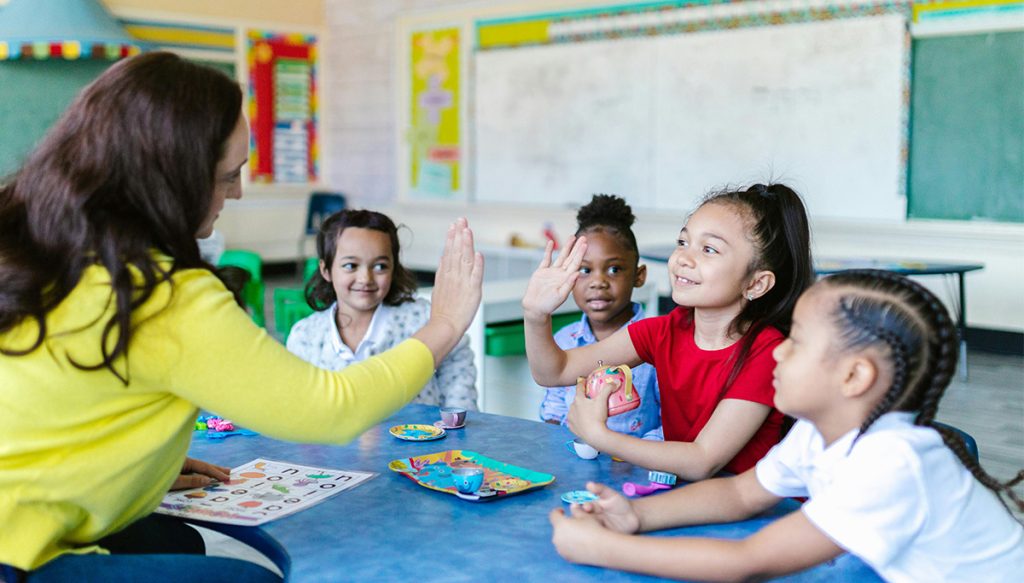
Private schools don’t face the same challenges. As a result, they’re able to design flexible programs that support students while challenging them to excel. Students benefit from smaller class sizes, flexible teaching methods to support their learning, and more educational resources.
With smaller classes, students receive individualized support. This is especially valuable for neurodivergent or gifted kids, who often get lost in the shuffle at public schools. Private schools’ individualized approach also helps kids get ready for college, with academic plans tailored to each student’s goals.
Private schools also tend to value a well-rounded approach to education. As a result, they devote more resources to technology, the arts, and physical education. A low teacher-to-child ratio means that kids are encouraged to pursue their strengths and their interests. At the same time, more one-on-one time with teachers means that kids get the extra support they need.
However, before you enroll your young learner in a private school curriculum, you’ll likely want to know if they’ll be learning the same subjects or more. Here’s a grade-by-grade overview.
Kindergarten: Learning the Basics of School and Structure
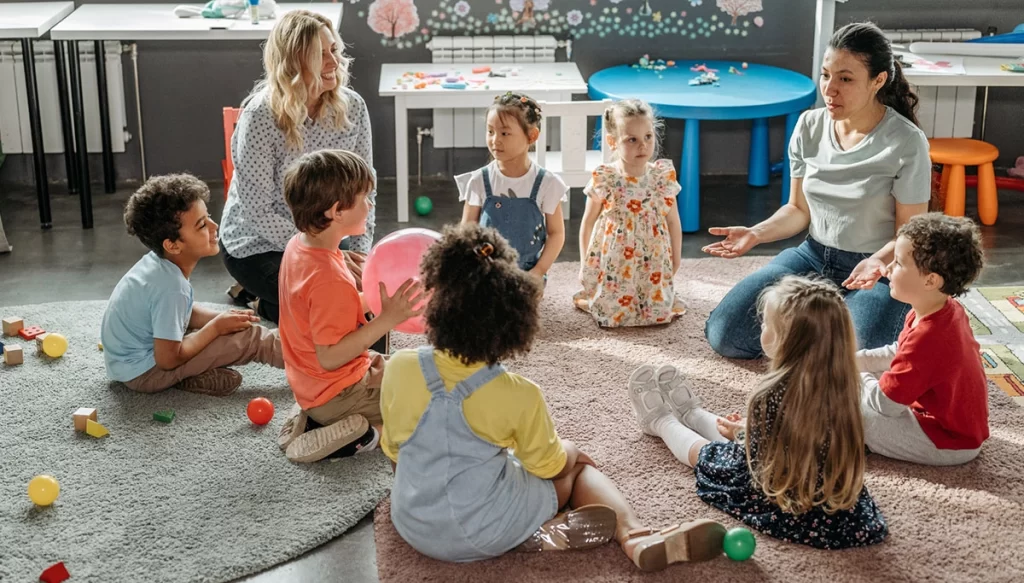
Kindergarten is where many children begin adjusting to a real classroom routine for the first time. Your child is learning how to listen, follow directions, participate in group activities, and become more comfortable working independently throughout the day.
Subjects often include:
- Phonics and early reading
- Handwriting
- Counting and number recognition
- Shapes and patterns
- Science discovery activities
- Social interaction skills
1st Grade: Building Reading Confidence
First grade is often when reading skills begin growing quickly. Your child starts connecting sounds more naturally while becoming more comfortable reading short books independently.
Writing also becomes more structured during this year. Students begin practicing complete sentences, spelling patterns, and basic grammar skills. Math lessons continue building addition and subtraction skills while introducing simple problem-solving activities.
Subjects often include:
- Guided reading
- Sentence writing
- Addition and subtraction
- Basic science lessons
- Social studies and community learning
- Creative arts
2nd Grade: Strengthening Academic Skills
Second grade usually brings more independence academically. Children begin reading longer passages and working through more detailed classroom assignments on their own.
Writing becomes more descriptive during this year, and students begin organizing thoughts more clearly on paper. Math instruction expands into larger numbers, measurements, and early multi-step problems.
Science and social studies lessons also become more discussion-based. Your child may begin learning about weather systems, animals, geography, and historical figures in greater detail.
Subjects often include:
- Reading comprehension
- Paragraph writing
- Math fluency
- Early STEM activities
- Geography and history
- Classroom presentations
3rd Grade: Becoming a More Independent Learner
Third grade is a major transition year academically. This is often when students shift from learning to read to reading to learn.
Your child begins working through more detailed reading assignments while learning how to summarize information, answer comprehension questions, and explain ideas more clearly through writing.
Math instruction becomes more advanced as multiplication and division are introduced more heavily. Students also begin taking more responsibility for assignments and classroom organization.
Subjects often include:
- Reading analysis
- Multiplication and division
- Paragraph and essay writing
- Science experiments
- Geography and government basics
- Research projects
4th Grade: Expanding Critical Thinking Skills
By fourth grade, students are expected to think more independently and work through more complex assignments across subjects.
Reading lessons become more analytical, and students begin identifying themes, supporting opinions, and comparing ideas across texts. Writing assignments often become longer and more structured.
Subjects often include:
- Literature studies
- Fractions and geometry
- Research writing
- Life and Earth Science
- Florida and U.S. history
- STEM projects
5th Grade: Preparing for Middle School Expectations
Fifth grade helps prepare students for the increased responsibility that comes with middle school. Academic expectations grow, but so does independence. Your child is ready for larger projects, balancing multiple assignments, and more collaborative classroom discussions.
Subjects often include:
- Essay writing
- Research and presentations
- Decimals and pre-algebra concepts
- Physical science
- Civics and history
- Leadership activities
6th Grade: Adjusting to Middle School Learning
Sixth grade often feels like a major shift for students. Classes become more structured, assignments become more detailed, and expectations increase across every subject. Your child begins learning how to manage time more independently while balancing multiple teachers, assignments, and responsibilities.
Subjects often include:
- Literary analysis
- Pre-algebra
- Earth and life science
- World history
- Research projects
- Technology integration
Our Private School Curriculum Helps Children Grow at Every Stage
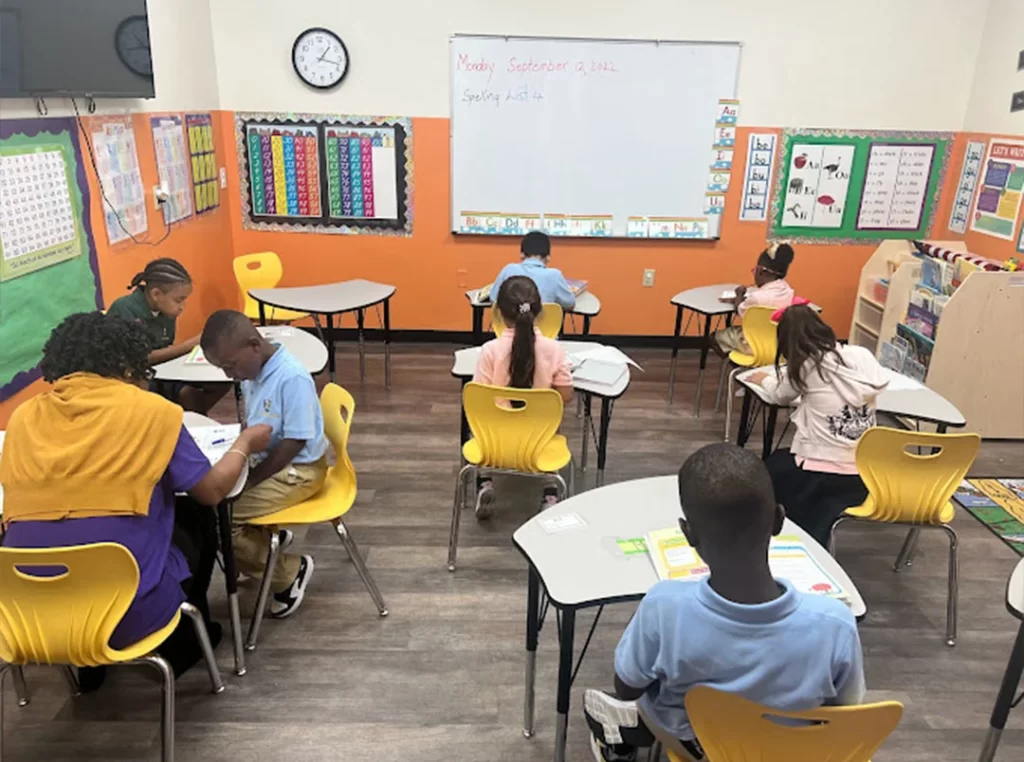
Every grade level brings different milestones, challenges, and opportunities for growth. Some children become confident readers early. Others need more encouragement with math, writing, or classroom participation along the way. That’s completely normal.
At JLP Inspiring Minds Private School, we believe children learn best when they feel supported, encouraged, and understood at every stage of learning. Smaller class sizes and personalized attention allow students to grow academically while continuing to build confidence in themselves along the way. Discover how JLP Inspired Minds Private School curriculum combines strong academics with personalized support and whole-child development from kindergarten through high school.
Contact us online for information about availability or give us a call at 954-746-5437 to schedule a tour.