
- What Age Range Does Preschool Usually Cover?
- How Preschool Fits Into The Broader Early Childhood Education Sequence
- What Development Often Looks Like At Age 2
- What Development Often Looks Like At Age 3
- What Development Often Looks Like At Age 4
- What Development Often Looks Like At Age 5
- Why These Preschool Years Matter
- So, What Age Is Preschool?
- Early Childhood Education Support In Tamarac
The preschool years are a big part of a child’s early growth, and many parents wonder exactly where that timeline begins and ends. In most cases, preschool covers ages 2 to 5, with some programs welcoming younger learners in two classrooms and others beginning at age 3 before moving children into Pre-K around age 4.
That matters because early childhood is a time of rapid development. In the first few years of life, more than one million neural connections are formed each second, which is one reason a quality Tamarac preschool program can play such an important role in helping children build social, emotional, physical, and learning foundations.
What Age Range Does Preschool Usually Cover?
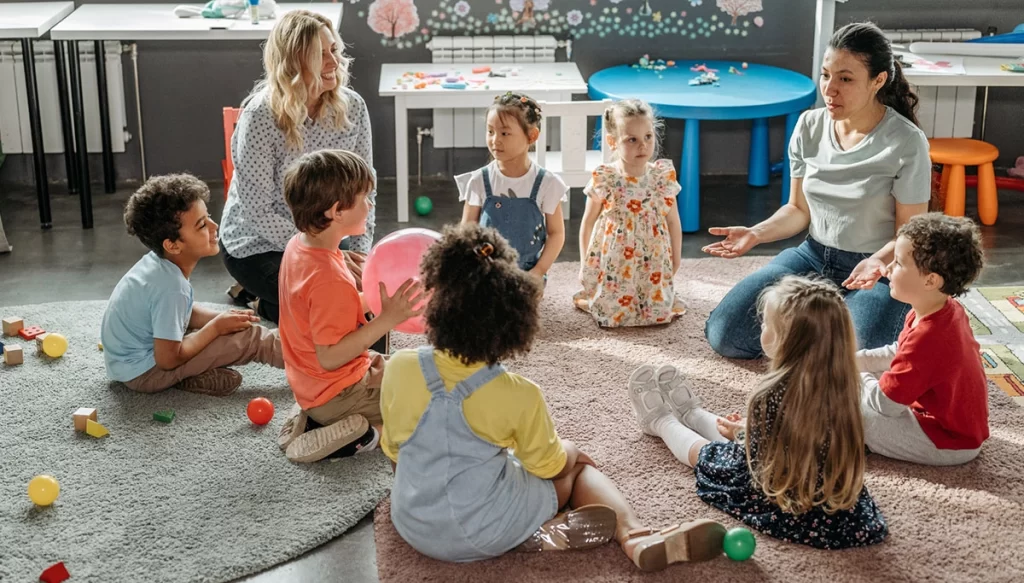
Preschool typically includes children between ages 2 and 5, although the exact age range can vary from school to school. The CDC describes the preschool years as ages 3 to 5, while many schools also offer a younger twos program that helps children ease into group learning before traditional preschool begins.
In Florida, many children move into Voluntary Prekindergarten, or VPK, at age 4. The Florida Department of Education notes children are eligible for VPK if they are 4 years old on or before September 1 of the school year.
A Simple Early Education Timeline
- Toddler program, usually around ages 1 to 2
- Two’s program, usually around age 2
- Preschool, often around ages 3 to 4
- Pre-K or VPK, usually around age 4
- Kindergarten, usually around age 5
How Preschool Fits Into The Broader Early Childhood Education Sequence

Tamarac preschool is part of a broader early learning sequence where children move from caregiver-supported routines into more independent social, emotional, and academic experiences over time.
This gradual sequence matters because children do not all develop in the exact same way or on the exact same schedule. A strong early childhood program meets children where they are, then helps them build the confidence and skills they need for the next stage.
What Development Often Looks Like At Age 2
At age 2, many children are learning how to take part in short routines, communicate basic needs, and begin playing near or with others. CDC guidance says many 2-year-olds notice when others are hurt or upset, say at least two words together, point to things in a book, and play with more than one toy at the same time.
This is why preschool curriculum at this age should focus on routines, connection, language exposure, guided play, and teacher support instead of pushing formal academics too soon. Children in this stage are learning how to feel safe, participate, and begin exploring the classroom world around them.
What A Good Program Supports At Age 2
- Separation support and comfort
- Simple routines and transitions
- Early language and listening skills
- Sensory play and movement
- Warm teacher-child relationships
What Development Often Looks Like At Age 3
Age 3 is often when preschool begins to feel like a natural fit for many families. By this age, many children are better able to communicate, join group activities, and follow a more predictable daily structure.
According to the CDC, many 3-year-olds can calm down within 10 minutes after a caregiver leaves, join other children in play, use back-and-forth exchanges in conversation, ask simple questions, and use a fork. These growing skills support classroom participation, friendships, and greater independence in a Tamarac preschool setting.
What A Good Program Supports At Age 3
- Group play and peer interaction
- Storytime and guided discussion
- Turn-taking and classroom routines
- Early independence skills
- Play-based learning with structure
What Development Often Looks Like At Age 4
By age 4, many children are ready for a more structured preschool or Pre-K experience that still keeps learning playful and age-appropriate. This is also the year many Florida families begin looking at VPK as part of the kindergarten readiness journey.
The CDC says many 4-year-olds pretend to be something else during play, ask to play with other children, comfort others, say sentences with four or more words, and talk about something that happened during the day. These skills help children build confidence, emotional awareness, and stronger communication in the classroom.
What A Good Program Supports At Age 4
- Early literacy and early math exposure
- Emotional regulation and empathy
- Longer routines and smoother transitions
- More independence in classroom tasks
- Kindergarten readiness through play
What Development Often Looks Like At Age 5
By age 5, many children are preparing to move from preschool into kindergarten. At this stage, the goal is not perfection, but a stronger foundation in communication, self-help skills, peer interaction, and learning readiness.
CDC guidance notes that many 5-year-olds can follow rules or take turns in games, tell a story with at least two events, answer simple questions about a book, name some letters, count to 10, and write some letters in their name. A quality Tamarac preschool program helps children practice these skills in a way that feels encouraging, safe, and developmentally appropriate.
What A Good Program Supports At Age 5
- Listening and following directions
- Stronger language and storytelling
- Early reading and number awareness
- Problem-solving and persistence
- Confidence for the kindergarten transition
Why These Preschool Years Matter
These early years matter because the brain is developing at an incredible pace. UNICEF says more than one million neural connections are formed each second in the first few years of life, and UNICEF materials also note that the brain reaches about 80 percent of adult size by age 3 and about 90 percent by age 5.
Early education is also already part of the path for many children. National Center for Education Statistics data show that 59 percent of 3- to 5-year-olds in the United States were enrolled in school in 2022, including 47 percent of 3- to 4-year-olds and 84 percent of 5-year-olds.
So, What Age Is Preschool?
The simplest answer is that preschool usually covers ages 2 through 5, with each year bringing its own developmental milestones and learning needs. Some children begin in a twos class, many start traditional preschool around age 3, and others move into Pre-K or Voluntary Prekindergarten at age 4 before heading to kindergarten at age 5.
What matters most is finding a nurturing school environment that understands how children grow year by year. If you are looking for a caring preschool community that supports the whole child, an experienced Tamarac preschool can help your child feel safe, seen, and ready to thrive.
Early Childhood Education Support In Tamarac

At Inspiring Minds Preschool, we understand that every child develops at their own pace, and we do our best to support each learner at the right level for their age and stage. Whether your child is just beginning preschool or getting ready for Pre-K and kindergarten, we would love to help you find the right fit.
Visit our preschool at 7147 N Pine Island Rd, Tamarac, FL 33321,or call us at 954-933-2982 to learn more about our programs. We would love to welcome your child into our early childhood education community.